About
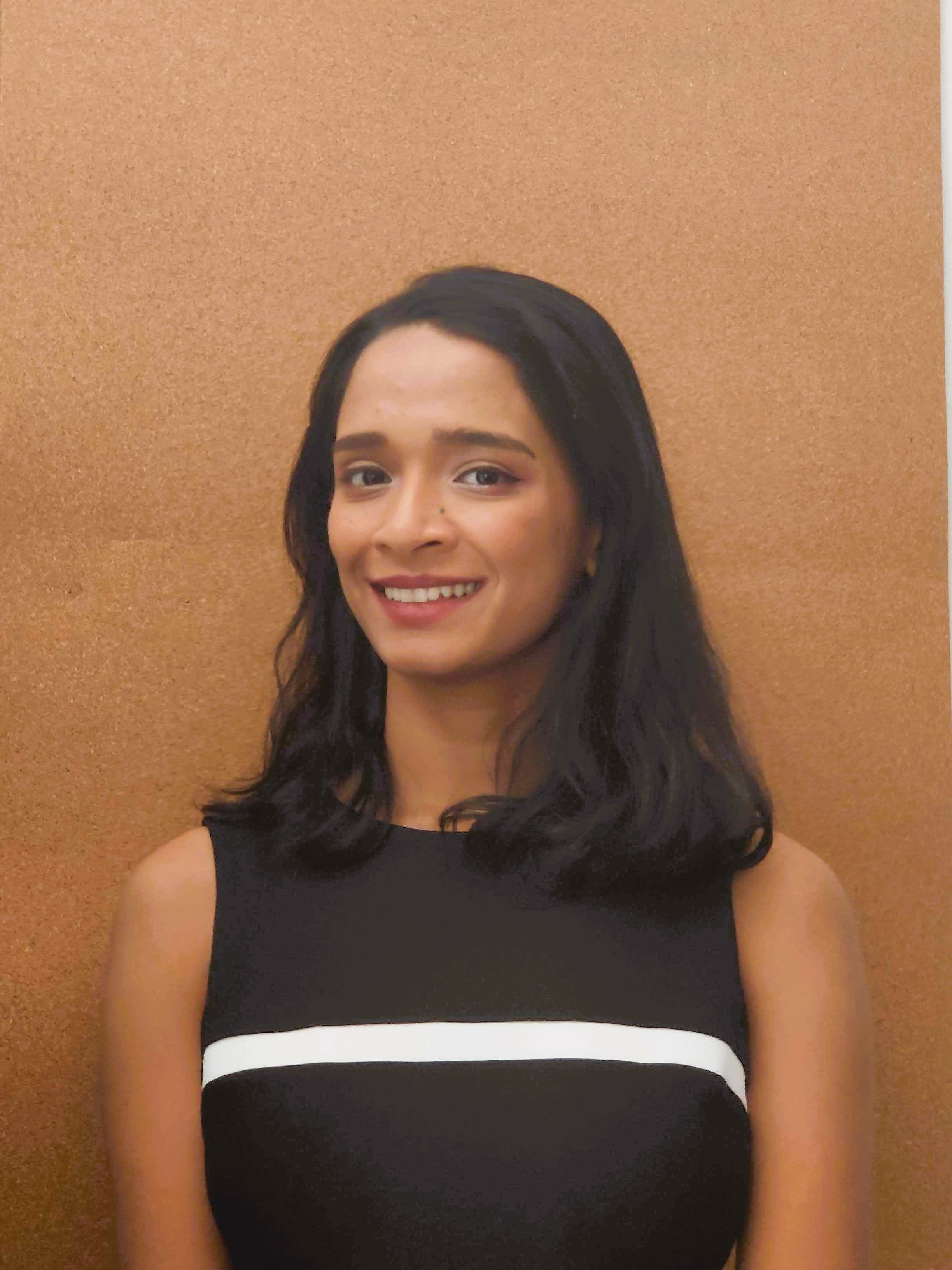
Hi, I'm Sreenidhi, a software and electrical engineer who also builds and leads community programs. I like finding where things break, from smart devices to AI tools, and working with people on what actually fixes it. I build fast, write down what goes wrong instead of smoothing it over, and adjust from there.
Available now for technical program management, technical product, and AI enablement roles.
St. Charles, MO, open to relocation. H-1B transfer only: Approved I-140, no lottery required.
How I work
A pattern I've noticed in how I work:
Find the real system behind the ask
Understand the people, constraints, dependencies, evidence gaps, and actual runtime behavior before deciding where the problem is.
Build enough for the gaps to surface
Get something working far enough end-to-end that assumptions stop being theoretical and weak spots become visible.
Separate what works from what's proven
Test outputs and failure modes. If the evidence doesn't support a claim, qualify it, revise it, or remove it.
Make the next decision easier
Document the reasoning, limitations, and next steps so someone else can act without retracing the work.
Leadership & mentoring
Organizing access to coaching, working through problems with engineers, and improving how a team works are three different jobs. Here is each one, with what I did and didn't do.
I joined the founder as a co-founder and helped build the group from the ground up. For our Women’s Day conferences I coordinated about 10–15 volunteers and organizers. We ran a two-day conference with UT Tyler and other local women’s groups and raised around $5,000 (approximate).
My co-founders and I made the events and the place for women in business to meet, learn, and find coaching. We ran business-building, brainstorming, and website-building workshops for small business owners and new entrepreneurs, and brought in community members who knew those topics. I organized access to coaching. I wasn’t the coach for all of it.
One-on-one sessions walking engineers through bugs they’d been stuck on, sometimes for days. I asked the obvious questions and had them treat me like a rubber duck that talks back. Sometimes a bug they’d fought for days got worked through in about twenty minutes. That happened sometimes. It’s not an average.
Merge requests were taking too long and people kept missing steps, like testing the code, checking the wording, or leaving specific comments. I found a checklist and adapted it into one place to check testing and review steps, for both preparing and reviewing merge requests. I took it to the CTO, who adopted it, and all engineers used it. The company has kept updating it for about five years. I saw merges go from weeks to days through fewer missed checks and less rework. That is what I observed, not a formally measured average.
Zero-Gravity Thinker
At Ivani, a Zero-Gravity Thinker is dropped into a team to work through a problem alongside them, not to teach them or take the project over. It was the part of my job I got asked about most.
- Slowing a team down when it is heading down a narrow path.
- Asking the naive question that opens up other options. Sometimes it solves the problem, sometimes it costs a little time now to save a lot later.
- Running a strategy workshop.
- Handing down expert advice.
- Taking the project over.
- Embed with a team as an outside perspective and challenge assumptions before they become downstream problems.
- Sketch requirements with engineers at a high level before they dive into detail, and keep the work followable with plans of action on Slack, worklogs, and block diagrams.
- Bridge stakeholders and engineering: raise hesitant questions in standups early, and pass honest engineer feedback upward in a form the company can act on.
- Help engineers stuck in a narrow debugging loop step back, and sometimes a bug someone had been stuck on for days got worked through in about twenty minutes. That is not an average.
AI adoption & prototyping
I test where AI tools are reliable, where they fail, and what evidence is still missing, then turn what I learn into guidance people can use. At Ivani, that meant comparing original and structured prompts on real engineering questions, then building reusable templates, a cheat sheet, and context guidance from what worked; use spread from two engineers to roughly ten in about two weeks. Directional savings estimates are in the case study below, labeled as informal observations, not controlled measurement.
Read the prompt-adoption case study →
Outside of work: a Slack helper for new hires (opens in new tab), an AI memory that knows what to forget (opens in new tab), and a tool that finds unused code (opens in new tab) , plus a habit of writing up what broke on dev.to (opens in new tab). More on Projects & Experiments.
Chronological
Experience
Where I've worked, roughly in order.
Engineering at Ivani
Software/Electrical Engineer at Ivani (Jan 2018–Sept 2026): hardware, firmware, device software, and data for wireless IoT systems (OpenThread, with ESP32, Nordic, and SiLabs chips). I helped design and maintain the system that carries data from the devices to the cloud, and contributed to the detection algorithm.
Detailed performance results for the detection work are confidential, so there are no accuracy or latency numbers here. The 1,000+ node figure is the size of the deployment I helped flash and provision, not a result, and not a deployment I owned alone.
- Debugged ESP32 firmware across error codes, serial port failures, and network-formation bugs, including a join-ordering bug fixed while working with Nordic hardware and the OpenThread stack.
- Configured and tested wireless IoT chips (ESP32, SiLabs, Nordic) for hardware validation, and flashed and provisioned devices across a 1,000+ node deployment and for partner demo kits.
- Wrote unit and firmware tests for embedded C, including checks that Python prototypes and their embedded C ports behave the same on target hardware.
- Contributed to the core sensor-detection algorithm and checked it behaves consistently across several chip platforms and operating systems (using virtual machines). Detailed performance results are confidential.
- Contributed to the ground-truth data collection pipeline: systemd services, Python (pandas, SciPy), InfluxDB, and Kafka.
- Ran technology trade studies and competitor evaluations before the team committed to a direction, and tested new microcontrollers as they arrived, including at-home Raspberry Pi setups for real-world usage data.
- Drew the algorithm and architecture diagrams (draw.io) that explained the design to the rest of the team.
- Took seven product concepts from loosely defined stakeholder needs to interactive prototypes in three weeks, using structured specs and a 19-check quality process, then presented them to company leadership and iterated on feedback.
- Found the code-level ordering bug behind a recurring field escalation for a partner deployment by testing motion triggers on site, then fixed it.
- Checked AI-generated guidance for embedded SDK work (Zigbee broadcast and signal-strength APIs) against verified documentation, using local models, before the team relied on it.
- Read internal and external docs end to end as a first-time user to catch gaps before customers or new hires did.
- Ran a cross-team engineering guidance program for 4+ years, with monthly focus themes and one-on-one rubber-ducking sessions supporting 5+ engineers outside formal reporting lines. Asking naive, outside-perspective questions often unstuck bugs people had been fighting for days.
- Wrote the team’s standard troubleshooting checklist for a recurring configuration bug.
Marketing co-leadership at Ivani
From about 2022 through September 2026, I co-led Ivani's marketing work alongside a marketing co-lead, outside my core engineering role.
- Content planning, analytics, and writing: blog posts, social posts, and the review workflow that routed drafts for approval by risk level (technical accuracy, product claims, IP sensitivity).
- Built videos and graphics (Canva), and proposed new content formats for the team to try.
- Coordinated day to day with the marketing co-lead on what to publish and when.
- Recommended positioning, content strategy, and market alignment based on competitor analysis and monthly and quarterly reviews of impressions, follower growth, engagement, website analytics, and demo inquiries.
- Worked with the CEO, CTO, and marketing co-lead to shape the company's voice (open, honest, approachable, occasionally snarky) and to translate RF-sensing, Thread, and 802.15.4 concepts into B2B messaging for technical, executive, partner, and non-technical readers.
- Specced and iterated a six-variant Sensify scrollytelling demo through rounds of C-suite feedback, reframing it around what partners needed to understand.
- Owned GA4 and OKR reporting from 2024: monthly audits plus quarterly and annual reports used to set content priorities.
- Drafted the Sensify OEM integration whitepaper and designed a seven-piece one-pager library for OEM product managers.
- Wrote three scenario-based visitor personas and a demo playbook for CES 2023 booth conversations. These were internal planning material, not customer research.
- Built the publishing system that the co-lead and I operated together, moving posting from little and irregular to roughly twice a week.
- Ivani's LinkedIn company page grew organically from about 1,000 to over 1,300 followers over about four years.
- The marketing work contributed to roughly 10 demo inquiries over about four years, tracked through LinkedIn messages, website contact forms, and prospects who mentioned the content directly.
- No paid advertising: free tools plus a paid Canva subscription.
This was functional co-leadership, done alongside a marketing co-lead and without a formal marketing-manager title or direct reports. More detailed reporting on these figures exists internally but is confidential, so it isn't published or claimed as independently audited here.
Embark Women (2017–2022)
Co-founder and CEO of Embark Women (2017 to 2022), built with my co-founder as a relationship-focused, no-selling community for professional opportunity, mentorship, and connection for women in Tyler, TX. Over five years we ran 20+ programs, including three annual conferences for 500+ participants (counted conservatively), grew to 800+ members on Facebook, and I personally supported 150+ members with career and business guidance.
I led community development, content, and outreach; my co-founder led finances, and we both pitched in wherever needed. Flagship events like the 2018 Evolve Women’s Conference (with UT Tyler, SheTribe, and The 1 in 3 Foundation) ran on volunteer teams of 10 to 15 and raised around $5,000. Every program was built to be easy to join: free or low-cost, flexible, and attentive to transportation, childcare, disability, and cultural needs, and centered women and underrepresented voices. It wound down as a nonprofit in 2022 and continues today as a regular group.
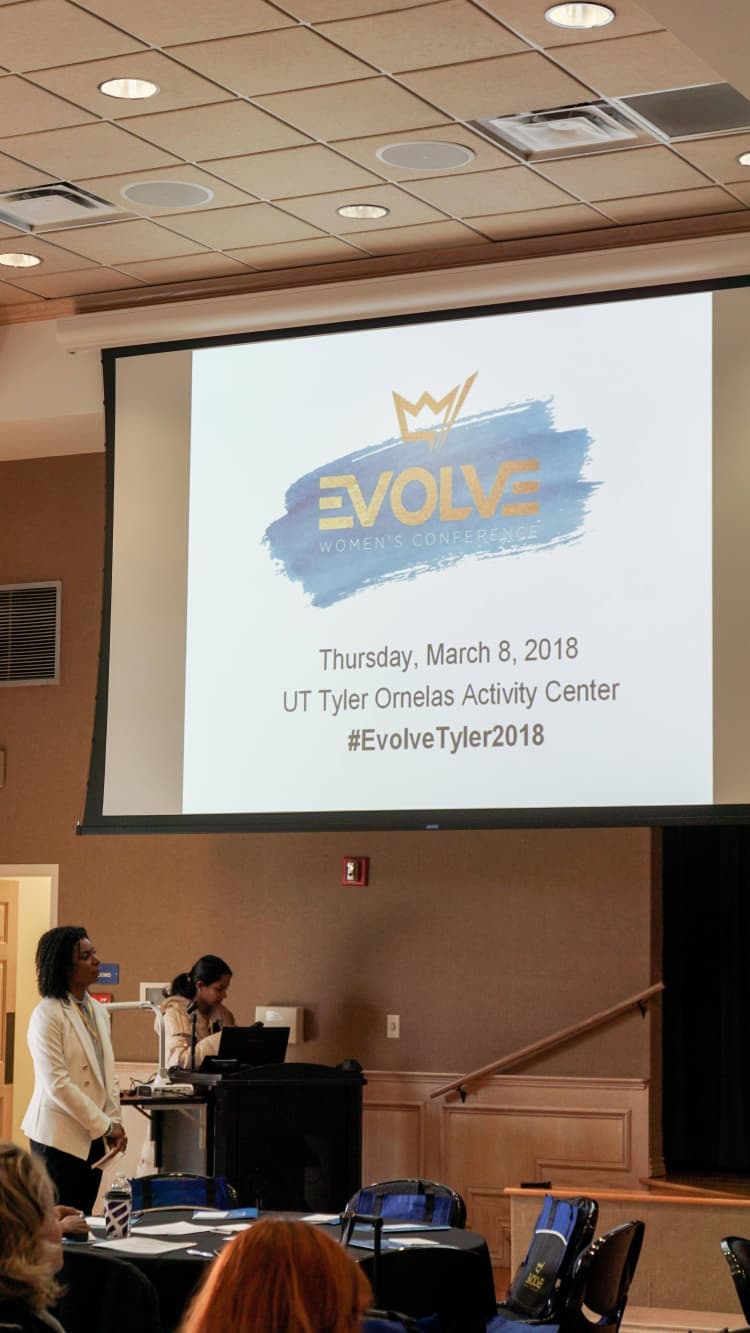
Evolve Women’s Conference, March 8, 2018, at the UT Tyler Ornelas Activity Center. (1 of 3)
Public record: the Facebook community (opens in new tab), Tyler Morning Telegraph coverage of the mentor network (opens in new tab), a profile of its founders (opens in new tab), KLTV coverage of the 2018 Evolve Women's Conference (opens in new tab), Tyler Morning Telegraph coverage of the same conference (opens in new tab), and an interview on Womenize! (opens in new tab).
Background
Before Ivani, plus education, certifications, and the rest.
- Wrote a multi-threaded Ruby tool that flashed firmware onto 400+ microcontroller boards remotely and at the same time, cutting deployment time and customer downtime.
- Debugged and fixed software issues in variable-speed drives (C/C++). Wrote failure scenarios and tested updates against them before they reached customers, because finding a problem in the lab beats finding it in the field.
- Designed and built embedded electrical systems that supported multiple microcontroller boards, with hands-on soldering and on-site debugging alongside field teams.
- M.S., Electrical Engineering, University of Texas at Tyler (2015–2016)
- B.E., Electronics & Communications Engineering, Alpha College of Engineering (2010–2013)
- AWS Certified AI Practitioner (opens in new tab), Amazon Web Services. Issued September 2026, expires September 2029. Verifiable on Credly.
English (full professional) · Tamil (native or bilingual)
- 6 hackathons joined, 6 Devpost projects shipped.
- 2 GitHub issues filed against Google ADK, one with a co-authorship invitation.
Have a technical problem, AI or otherwise, that needs a second pair of eyes?
Let's talk.